Police shoot father of five in Michigan Disputes arise over law enforcement’s narrative after fatal shooting of Black man
- April 6, 2026
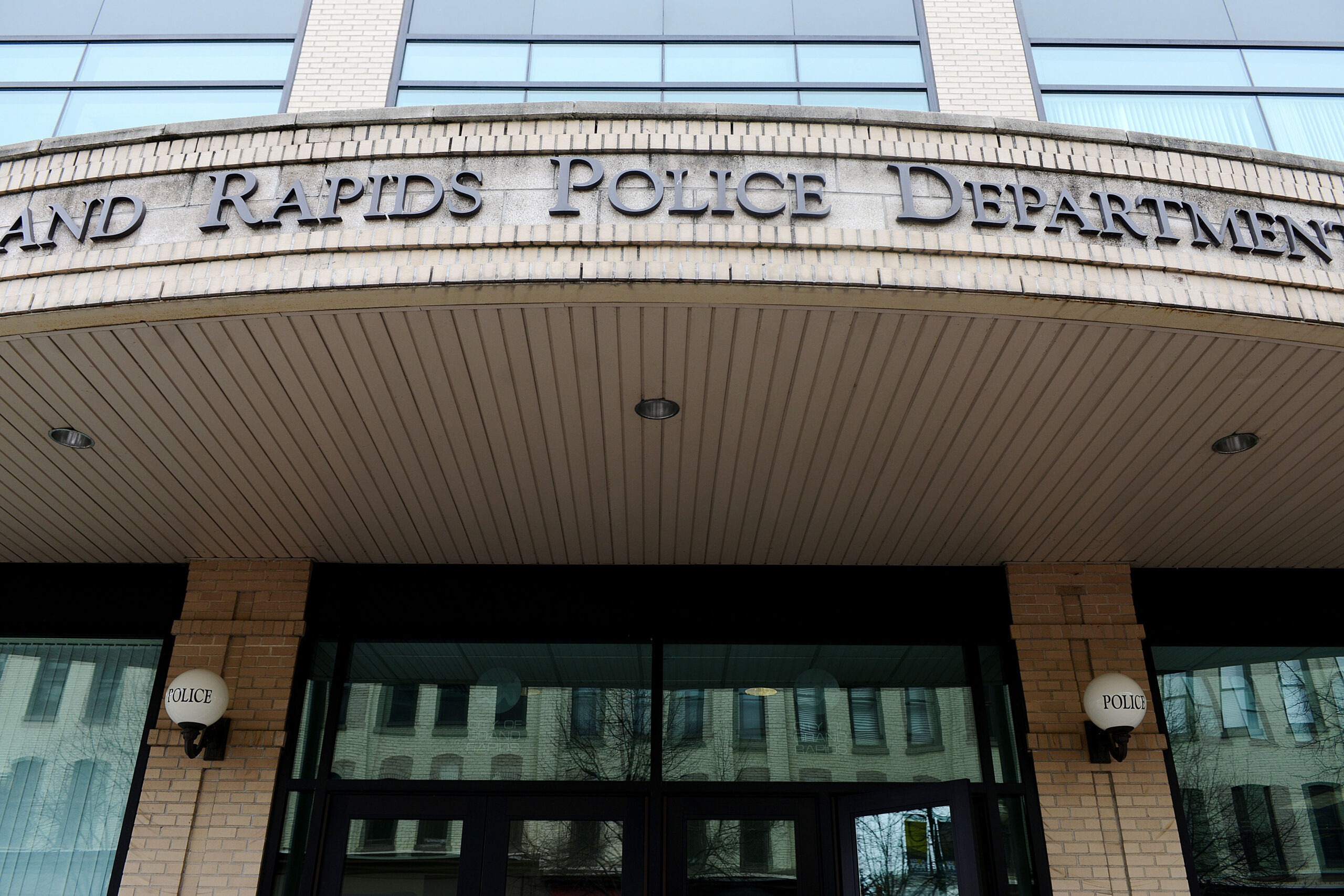
This March 11, 2014 photo shows The Grand Rapids police station in Grand Rapids, Mich. Grand Rapids plans a $345,000 renovation to its police station lobby that will address long-held security concerns and restrict public access inside the department's headquarters. Capt. David Kiddle says that security at the Monroe Center headquarters was set before the Sept. 11, 2001 terrorist attacks. The facility opened before the attacks. It doesn't have a secure lobby and one entrance was shut to boost security. Under the new plans, officers would sit behind bullet-resistant glass. A staircase and elevator leading to offices wouldn't be accessible to the public. (AP Photo/The Grand Rapids Press, Emily Rose Bennett) ALL LOCAL TV OUT; LOCAL TV INTERNET OUT
Family, friends and community leaders are concerned over the alleged police K9 mauling and subsequent shooting death of a Black father in Grand Rapids, Michigan.
They argue that this latest case is contributing to an already tense atmosphere of animosity between law enforcement and the Black community in the city. Dá Quain Johnson, 32, is the most recent fatality after a police encounter.
Angelica Johnson, a lifelong resident of Grand Rapids and the mother of Dá Quain Johnson, told The Final Call that her son was engaged to be married and that his February 18 killing has forever altered the trajectory of several lives, including those of his friends, family and children, including his 13-year-old daughter who reportedly witnessed the mauling of her father by a police dog before he was shot.
Mr. Johnson was a father of three, in addition to having two stepdaughters and an unborn baby due in August.
---
“He was riding a bicycle, and he was actually in a good mood, but he (told) me that the police had been following him,” Ms. Johnson said of a cellphone conversation she had with her son prior to his killing, which took place in front of his home. She said he told her about an hour before the incident that the police had been following him.
Ms. Johnson said she was then on the telephone with her son’s fiancée, who reportedly witnessed the incident outside the window. “As I’m on the phone with his fiancé, my granddaughter beeps in and she merges the call and all we hear is, ‘The dog’s got him! The dog’s got him!’ And in the next breath, she was like, ‘They shot him!’” she recounted.
“She watched the entire thing, details that they’re not releasing to the press,” Ms. Johnson said, noting that her granddaughter was hysterical and remains traumatized.
She added that the entire incident started from a 911 call alleging her son had a gun, and that police said he pointed it toward an officer. A police officer shot Dá Quain, who was pronounced dead the next day at a local hospital.
Ms. Johnson also said earlier that day that Dá Quain had just visited his parole agent (officer) and that he had been recently released from jail. She explained that after all her son had been through, his focus was to be with his family and his children and insisted that she didn’t believe the police narrative that he had a gun.
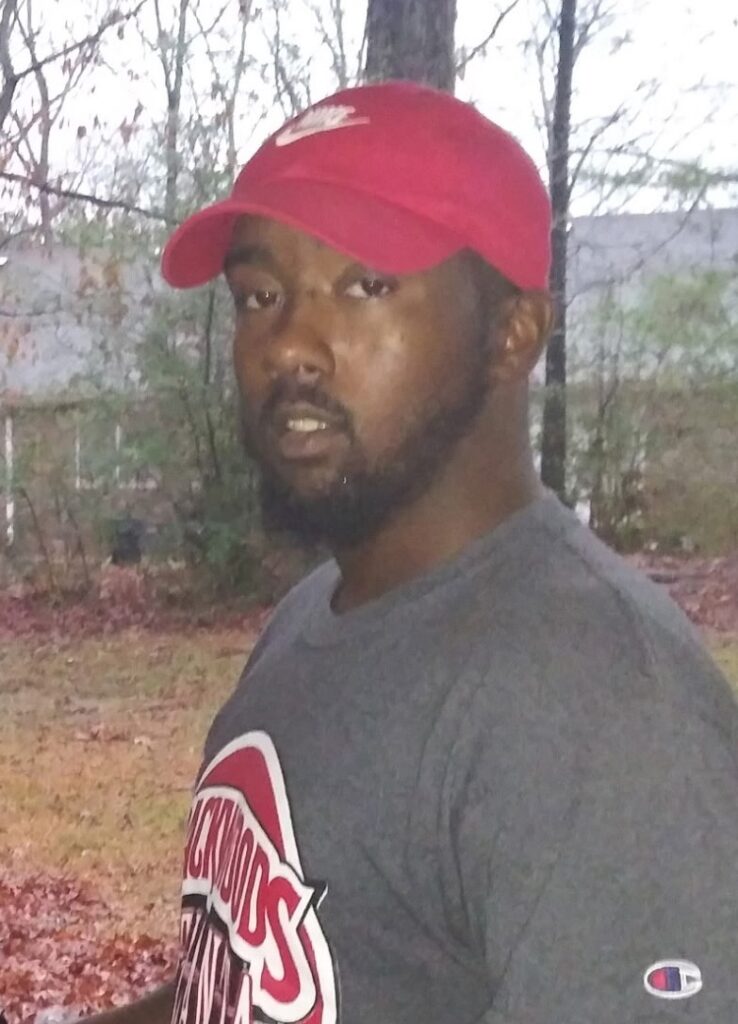
Dá Quain Johnson
Ms. Johnson noted Dá Quain was not authorized to possess a firearm and, given his meeting earlier that day with his parole officer and his excitement over the pending birth of his baby, she argues that the facts do not add up. “I don’t even think he would have chanced that,” Ms. Johnson stated flatly.
There was reportedly some witness videos live-streamed on social media, and other videos that were not made public but were shared with attorneys.
According to a February 19 press conference, outgoing GRPD police chief Eric Winstrom announced that police bodycam and dashcam footage disputed witness accounts of the incident and that various cell phone videos recorded by neighborhood witnesses were adding to the confusion surrounding Dá Quain Johnson’s death.
An updated GRPD media release stated, “Officers rendered aid at the scene, and the suspect was taken to the hospital. The Michigan State Police (MSP) responded to investigate the officer-involved shooting, as per procedure. The officer is on administrative leave, also per procedure,” the statement read.
“We’ve heard a lot of calls from the community, there’s a lot of inconsistencies or outright falsehoods being spread on social media, and tragically this young man last night involved in the shooting last night died,” Chief Winstrom said during his press conference.
“Two officers that tried to stop this individual on a bike, he was suspected of having a handgun and first you’re going to see an in-car camera video, then you’re going to see a body-worn camera video of the same officer and then a brief body-worn camera video of the second officer,” he said of the edited versions released during the news conference.
According to WZZM-13, a local ABC affiliate, when Mr. Johnson “got off his bicycle in the apartment complex parking lot on Eastern Avenue SE, he appeared to fall before police sent a K9 after him.
The dog appears to jump on and bite Johnson.” Police fired multiple shots, and the cause of his death was from a gunshot to the back, according to the death certificate, reported WZZM13.com.
The officers’ names have not been released as of Final Call press time. The Johnson family, community residents and the Grand Rapids chapter of the NAACP have demanded a full and transparent investigation and accountability.
The fatal shooting of Dá Quain Johnson has the community on edge, as it is not the only police involved killing of a Black man in Grand Rapids. In an unusual turn of events, according to a February 27 article on officer.com.
Chief Winstrom announced he was stepping down on March 1 because of “anti-police sentiment” and “ongoing criticism” in part due to the 2022 shooting death of Congolese refugee Patrick Lyoya (see Final Call Vol. 41 No. 30), ongoing protests and local resistance to department initiatives. The article also said he was chosen February 3 to become the next police chief in Pensacola, Florida.
The interim police chief is Joe Trigg. The Michigan State Police completed its investigation, and on March 3, the Johnson investigation was turned over to the Kent County Prosecutor’s Office, where prosecutor Chris Becker is reviewing the materials and has requested additional information before deciding on charges regarding the use of force.
“Yesterday afternoon Michigan State Police turned over what they had at this time regarding the investigation into the GRPD officer involved shooting. After discussing the case with them, I have already requested a follow-up on certain items, so the investigation is not complete.
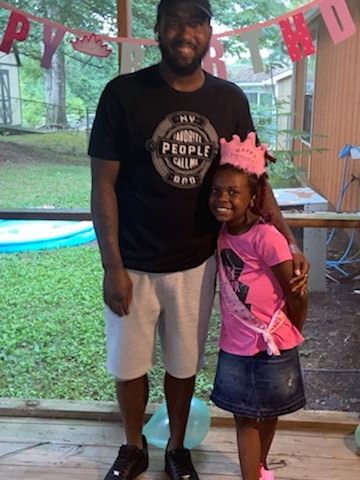
Dá Quain Johnson during daughter’s birthday party.
I am in the process of reviewing all of the materials they presented as well, since I just received the materials yesterday,” Atty. Becker said in a statement,” the outlet reported.
“I am committed to conducting a comprehensive review of this incident, as I have in all such cases in the past, and will announce my decision when I have all of the information. I do not have a timeline for when that will be,” he continued.
Attorneys and witnesses continue to dispute that Dá Quain Johnson pointed a gun at officers after fleeing on his bicycle and argue that the shooting was unnecessary.
Third Ward resident and community organizer, known in the Southeast neighborhoods as “Juju,” told The Final Call she was first alerted to the killing of Dá Quain Johnson after a live social media video went viral.
She requested that her first and last names be withheld because of her outspokenness about police brutality in the city. Juju said that the community’s outrage is real.
“I was born and raised in Grand Rapids my entire life and as I grew up watching my classmates who were Black and Brown men either being taken away and being served excessive prison sentences, they were brutalized by police,” Juju explained.
“So, as we grew older, we were coming into positions where we can speak up and stand and say something about it and it’s my opinion because the police haven’t faced any sort of accountability. Not just prosecution, but even in admitting that things could have gone differently at the very least or in any situation,” she said.
Pastor Darryl Gaddy of Pilgrim Rest Baptist Church in Grand Rapids, of which Dá Quain’s mother is a member, told The Final Call he had reservations over the truthfulness of the police narrative and how events led to the young, Black man’s death.
Pastor Gaddy also said he supports a closed-door meeting within the city’s Black community, developing a consensus around an action plan and that it is vitally necessary to educate young people not only of their rights, but also of how to properly interact with law enforcement officers.
“We did see on the video that he was facedown, therefore I would say he was incapable of brandishing a weapon directly at police officers based on what we all saw on that video, that he was chest down toward the ground with the dog on his back and two officers on his back,” Pastor Gaddy said.
“So, it goes to show the narrative of policing, how they will paint a picture to justify what we believe in the community to be excessive force—up to and including the point of (killing) a young man,” he continued.
“We have to do a better job of policing ourselves so that first of all, we don’t have to call 911 and we don’t have to have these reports made on us because we are doing the accountable and responsible thing,” Pastor Gaddy explained.
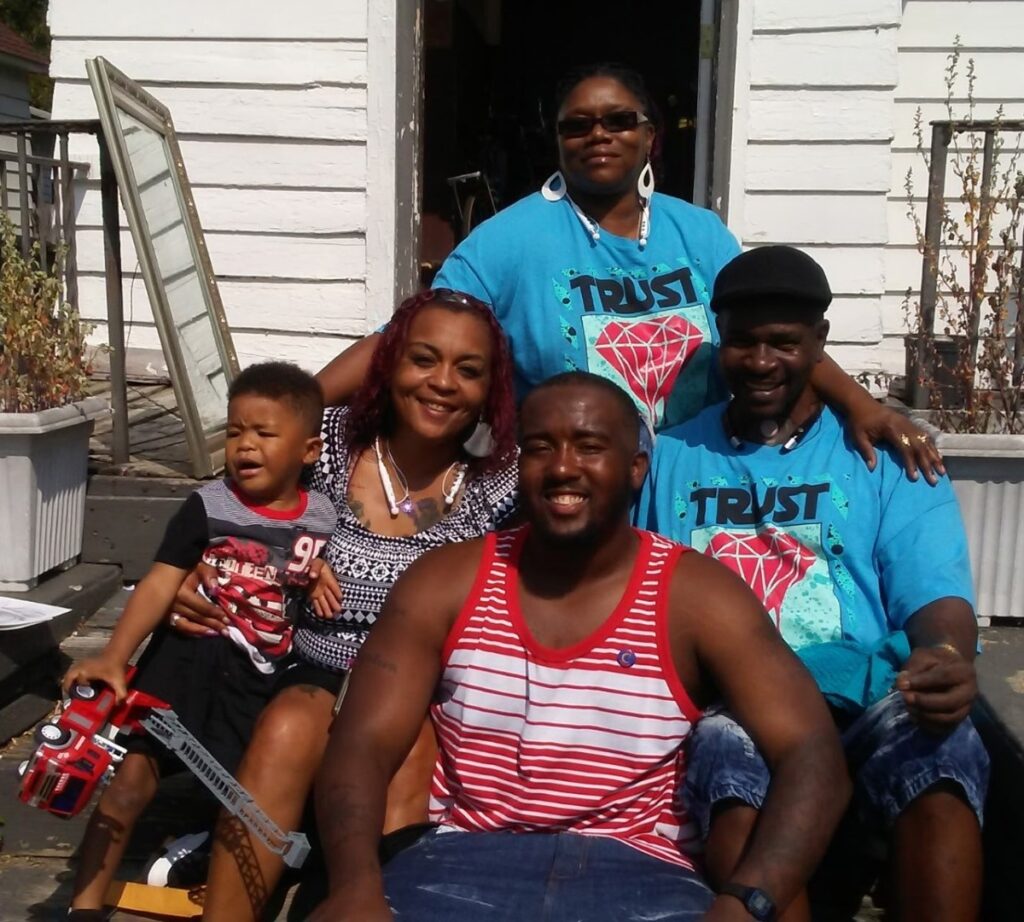
Dá Quain Johnson (red and white shirt) and family members from left, his son, his mother Angelica Johnson, and his grandparents.
Photo courtesy of Johnson family
“The second aspect of that is I believe we have to hold our law enforcement community accountable when there is not a necessity of excessive force and that they could do a better job of policing, of de-escalation.”
Attorney Ben Crump, Attorney Ven Johnson, and the family of Dá Quain Johnson held a virtual news conference on March 20 to announce legal representation and demand justice. Atty. Johnson revealed that Mr. Johnson had been shot three times in the back.
The attorneys announced the filing of FOIA (Freedom of Information Act) request with the Michigan State Police for its records and video footage related to the case. “We are here with Angelica Johnson to let her know that her son’s life mattered,” said Atty. Crump.
We’re here to raise the justice baton for Dá Quain,” he added. “We must always remember the humanity in all people.” Atty. Crump argued that the best angle of what happened was from a bystander video, not the edited video the police have released.
“It is so unjustified,” Atty. Crump said, referring to the shooting. He called it “an assassination,” saying, “because that’s what it looks like when you watch it.”
The Honorable Minister Louis Farrakhan, National Representative of the Most Honorable Elijah Muhammad, Eternal Leader of the Nation of Islam, has taught on the critical need for Black people to work to make their neighborhoods safe and decent places to live, thereby lessening the need for outside law enforcement. He has also warned that some police function as “modern-day lynch mobs.”
“I want Black youth to hear this message, because police authorities are the same today as they were during slavery. In fact, this is how policing began. Police were formed to catch runaway slaves, bring them back to their masters and make examples of them to throw fear into other slaves.
It’s the same today. Police authorities are trained to kill, as well as to protect. But where Black people are concerned, police legitimize their mob attacks under the name of ‘back up.’ Police back up is often no different than the lynch mobs 100 years ago.
The killing of our people, shooting them with many bullets when one would have done the job. And then, that deliberative body, which is to discuss the brutal murder of our people by looking into the facts, comes away calling it justifiable homicide,” Minister Farrakhan said in an October 28, 2007, message titled, “Justifiable Homicide: Black Youth in Peril.”
Nation of Islam Student Minister Sultan Z. Muhammad of Mosque No. 61 in Grand Rapids told The Final Call that for decades, Minister Farrakhan has warned the Black community that police would frame the killing of Black youth as “justifiable homicide” as a means to legally deploy lethal force either before or after a deadly encounter.
“Here in Grand Rapids, from our mosque, we are striving to do what the Honorable Minister Louis Farrakhan instructed us to do, specifically from our Saviours’ Day 2026 convention, which is to strive to make our community a decent and safe place to live,”
Student Min. Sultan Muhammad said, referring to the Saviours’ Day 2026 keynote message, “We Must Make Our Community a Decent and Safe Place to Live.
Final Call staff contributed to this report.

No comments:
Post a Comment