FROM THE FINAL CALL NEWSPAPER

Farrakhan, Nation of Islam convention to highlight mission to save Black America

By Ashahed M. Muhammad -Asst. Editor- | Last updated: Feb 16, 2011 - 6:22:48 PM

Bookmark and Share

What's your opinion on this article?

Printer Friendly Page

CHICAGO (FinalCall.com) - Excitement is building across the country as thousands prepare for the Nation of Islam's Saviours' Day 2011 Convention.
min_ishmael2011.jpg
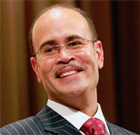
Ishmael Muhammad
This year's convention marks the 81st year of the Nation of Islam's existence in North America. Each year, to commemorate the birth of its founder Master W. Fard Muhammad, members from around the world make the journey to Chicago, Illinois during the last week of February for a time of fellowship, networking, information dissemination and spiritual renewal.

“We are in anticipation of one of the greatest Saviours' Days in our history,” said Student Minister Ishmael Muhammad, son of the Honorable Elijah Muhammad, and Minister Farrakhan's assistant at the Nation of Islam's international headquarters Mosque Maryam in Chicago.

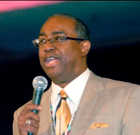
Ademah Muhammad, the Nation of Islam's special events coordinator, told The Final Call the staff and laborers have been working non-stop to make Saviours' Day 2011 enjoyable for all ages and interests.
ademah2011.jpg
Ademah Muhammad
“The Saviours' Day convention staff has been remarkably efficient. The staff has been working hard for the last seven months to get this together,” he added.

This year, the workshops and plenary sessions are being held under a common theme: “A Scientific Analysis of the Teachings of the Honorable Elijah Muhammad.” Some of the best academic minds in their fields have come together for what is sure to be a Saviours' Day like no other.

Two very stimulating plenary sessions will kick off the convention on Friday, Feb. 25

The morning plenary session features a wide-ranging discussion involving the controversial best-selling book The Secret Relationship Between Blacks and Jews, Volume 2 from the Nation of Islam's Historical Research Department.

After the congregational Jumu'ah prayer service, the afternoon plenary session revolves around the subject “Extreme Weather and Natural Disasters.”

With recent snowstorms and cold temperatures blasting large portions of the U.S., and given the unpredictable nature of world events, experts in the area of disaster preparedness will discuss ways to make sure families have what is needed to overcome any challenges that could arise during times of emergency or instability.

On Saturday, Feb. 26, the very informative morning plenary session deals with “How to Eat to Live: Heath and Well-Being of Humanity.” The Hon. Elijah Muhammad's words in How to Eat to Live, Book One and Two delivered groundbreaking dietary guidance acting as a catalyst for an entire generation of holistic health practitioners. With recent food contamination reported and escalating prices, his guidance is needed now more than ever.

Related to that area, the pioneering agricultural work of Growing Power, Inc. will be on display. Demonstrations of the innovative food producing system utilizing the “hoop house” technique will be shown. Beyond the traditional greenhouses, the hoop house is essentially a low-cost greenhouse that can be constructed with commonly available materials.

Perhaps the most intriguing plenary session and certainly the one being discussed the most is titled: “The Truth About the Existence of Unidentified Flying Objects.”

The recent sighting of an “Unidentified” Flying Object over the Dome of the Rock in Jerusalem has more people seeking real answers regarding what they actually are, how they operate, and their purpose.

For decades, Minister Farrakhan has spoken openly regarding that which he was taught by the Hon. Elijah Muhammad regarding these flying objects. At the afternoon plenary session, renowned international scientists and researchers bring compelling, extraordinary evidence that will provide evidence and proof of what the Honorable Elijah Muhammad taught, removing any mysteries regarding their existence.

“Last year he (Minister Farrakhan) told us that these UFOs or flying objects would be seen over the major cities,” said Student Minister Ishmael Muhammad. “There have been more and more sightings reported from around the world,” he added.

All four plenary sessions are scheduled to be shown live via internet webcast at http://www.noi.org.

“God Will Send Saviours”

On Sunday, February 27, the highly anticipated keynote address by The Honorable Minister Louis Farrakhan will be delivered at the 18,500 seat Allstate Arena in Rosemont, Illinois at 2 p.m. His subject is: “God Will Send Saviours.”

sd2011_adv.jpg
“Given what is happening in the world and on our planet, the Minister's keynote address will be one of the most important messages that he has ever delivered,” said Student Minister Ishmael Muhammad.

Among the displays shown during the four-day convention will be an historical museum which will include photos, books and clothing artifacts chronicling different phases of the development of the Nation of Islam and its contextual placement within the Black religious, cultural and socio-political experience of America.

There will be an historic sightseeing bus tour that includes viewing many of the properties purchased by the Honorable Elijah Muhammad and owned by the Nation of Islam prior to his departure in 1975 and also a health fair in which health care professionals will be available to answer questions and conduct blood pressure readings, diabetes screenings and oral examinations.

An annual favorite is Mother Khadijah Farrakhan's Children's Village, which is free for all children who register during Saviours' Day. As always, those children who attend will have an opportunity to have their pictures taken with the First Lady of the Nation of Islam. Additionally, dozens of entries from all across the United States were received for the first ever Saviours' Day 2011 Essay and Art Competition. The theme of the competition is “What Saviours' Day Means to Me.” The winners will be announced over the weekend and the work of the winners will be displayed in The Final Call.

This year also marks the return of the incomparable drill competition. Drill teams from across the Nation of Islam will engage in righteous competition displaying the discipline and precision that is a hallmark of the Nation of Islam's Fruit of Islam and Muslim Girls' Training and General Civilization Class.

There will be evening screenings of the documentary “The Black Line Profile of the African-American Man.” This film takes a look at the inner-thoughts of Black men from all walks of life, on a variety of topics affecting the Black community.

A Jazz and R&B Show is scheduled for Friday, Feb. 25 and on Saturday, Feb. 26, a comedy show is scheduled, all taking place at the Stephens Convention Center.

As always, the Salaam Expo vending section will be available throughout the entire conference with friendly hours and affordable deals on goods and services that you would have trouble finding anywhere else.

“This is going to be one of the best Saviours' Day conventions in recent memory,” exclaimed Ademah Muhammad. “It will be awesome! Saviours' Day is going to be awesome because of the subject matter of the workshops and plenary sessions. It is right on time.”

“What will the Minister tell us this Saviours' Day of things to come and how we should prepare?” Student Minister Ishmael Muhammad asked. “This is a Saviours' Day that no one should miss!”

FROM THE FINAL CALL NEWSPAPER

Prophecies fulfilled Judgments punish America

By Ashahed M. Muhammad -Asst. Editor- | Last updated: Feb 9, 2011 - 3:49:20 PM

Bookmark and Share

What's your opinion on this article?

Printer Friendly Page

chi_blizzard02-15-2011.jpg
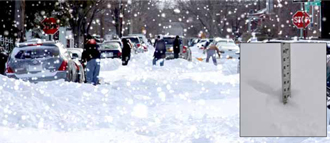
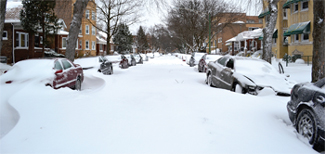
A massive blizzard containing whipping winds and “thunder snow” trapped vehicles and damaged buildings in Chicago. The Feb. 1 storm covered 30 states and was followed by sub-zero temperatures. Photo: Nubian Muhammad
CHICAGO (FinalCall.com) - Severe weather across parts of the United States in 2010 resulted in 81 disaster declarations by the Federal Emergency Management Agency (FEMA).

That total was the most of any year on record and nearly three times the annual average of 33.

Already this year, FEMA has declared major disasters or emergencies in New Jersey, Missouri and Oklahoma, due to winter snowstorms, Maine due to severe storms and flooding, and California, due to flooding, debris and mudflows. With parts of the country receiving wave after wave of winter punishment, that previous 2010 total could be eclipsed.

What has gone underreported is that the brutal snowstorms pummeling many cities are weakening the already tenuous financial situations of those cities. Above normal and record snowfalls in many cases have depleted existing budgetary allocations for snow removal.

In Chapter 36 of his book The Fall of America, published in 1973, the Honorable Elijah Muhammad writes:

“Snow is of the most dreaded plague when it comes in great drifts from five to thirty-five feet. It buries your property and lives. It destroys your highways, your cities, and your concrete and gravel in towns and cities. It puts a great burden of expense upon the cities. It puts a great burden of expense upon the city to repair it. The cave-in of roofs of homes, the cutting off of homes, the cutting off of transportation, isolating areas, brings about starvation. And communication is destroyed with the icing of communication wires.”

In numerous cities across the United States of America, these prophetic words are being fulfilled.

In Chicago, a city, which prides itself on maintaining a “business as usual” atmosphere while successfully navigating heavy snowfall with minimal disruption, hundreds of cars were stranded on a major thoroughfare, Lake Shore Drive, which connects the north and south sides of the city Feb. 1. Traffic became snarled when whipping winds created swirling blankets of snow reducing visibility to almost zero. Ice blocks and slippery conditions developed along Chicago's lakefront as Lake Michigan's waves were tossed about by wind gusts topping 70 miles per hour. The treacherous driving conditions rendered travel completely impossible. Dozens were trapped in their cars for between 10 and 12 hours before being rescued by members of Chicago's Emergency Management team.

Chicago's bustling downtown area resembled a ghost town for nearly two days, with those choosing to brave the hostile conditions forced to walk down the middle of usually busy traffic clogged streets because the sidewalks were blocked by high snow banks.

A recent analysis and report from the retail consulting firm Melaniphy & Associates Inc., reported Chicago-area businesses lost revenue in the area of $600 million due to business closings and reduced customer traffic on Feb. 1 and 2.

Chicago's Public Schools were completely closed for two days and with some schools remaining closed for a third due to mountains of snow several feet high still blocking side streets. Tens of thousands lost power, with many repairs delayed because the snow blocked access to power lines. The storm, which turned Chicago into what many in the blogosphere are calling “Chiberia,” resulted in the third highest snowfall ever recorded, 20.2 inches.

While still digging out from the historic blizzard just days earlier, Chicagoans were hit with a blast of arctic temperatures including below zero wind chills as another two to four inches of snow fell in some areas Feb. 6. The forecast for the next few days expected to see high temperatures only in the low teens, with lows possibly hovering near 10 degrees below zero.

Since the middle of December 2010, there has been one harsh snowstorm after the other.

There have been record snowstorms in many cities: Tulsa, Oklahoma experienced 14 inches of snow, Moline, Illinois received 18.4 inches. According to meteorologists at The Weather Channel, the recent storm system—which stretched, more than 2,000 miles—held the potential to impact nearly100 million people.

Snow and ice hampered travel and commerce leading up to the NFL's Feb. 6 Super Bowl XLV hosted at Cowboys Stadium in the Dallas-Ft.Worth area. In fact, ice fell from the roof of the stadium Feb. 4 injuring at least six people. Typically, the week prior to the Super Bowl is filled with parties and promotional events that generate capital for the host city and many businesses. Many events were canceled, those still held experienced lower attendance because of inclement weather and altered travel schedules due to canceled and delayed flights.

The heavy demand on energy brought about by the unusually cold weather caused rolling blackouts in other parts of Texas, while natural gas shortages are being experienced in New Mexico.

In Muskogee, Oklahoma, several vehicles where damaged when a convenience store's aluminum canopy collapsed due to heavy snow accumulation. Roof collapses were reported in such diverse areas as New England and Missouri due to the heavy snow. Coats of ice two to four inches thick have been reported from areas of the Midwest to the East Coast.

Food price increase?

The most recent storm could also affect food prices.

chi_blizzard02-15-2011_2.jpg
Record snowstorms have hit many U.S. cities in 2010-2011. (Inset) standing snow measured 24 inches with drifts up to 5 feet in Chicago, IL. Graphic: MGN Online
According to the Associated Press wheat prices rose Feb. 3 on speculation that the storm which roared across the U.S. might have damaged crops in the Great Plains region with its subzero temperatures.

The Northeast is suffering through one of its most brutal winters in years, with cities all along the seaboard reporting snow piling up at a record-setting pace. Connecticut has been especially hard-hit, with Hartford reporting 81 inches since Dec. 1, compared with an average of 46 inches, according to the National Weather Service. Though used to dealing with cold weather, the region is having a different experience with the frequency and mixture of this season's severe weather.

Snow and ice has caused collapses requiring costly repairs, killing animals and destroying tools and supplies. Reportedly, Connecticut farmers have lost at least 136 barns, greenhouses, sheds and other structures as snow accumulated while January passed without a thaw. Recently 85,000 chickens and 14 dairy cows were killed when a coop collapsed. Losses are still being totaled by the state Agriculture Department and Commissioner Steven Reviczky says no one can remember a more destructive winter.

It may seem contradictory or unusual, however even after experiencing record snowfall in many regions, some areas of the U.S. are still experiencing severe drought conditions. According to hydrologists from the National Weather Service, two feet of snow translates to only about an inch of precipitation, the significant snow will help, but won't have as much impact as many would think.

The National Drought Mitigation Center based in the School of Natural Resources at the University of Nebraska–Lincoln maintains the Drought Impact Reporter, which is based on news reports complied from more than 5,000 online media sources and reports from private citizens and governmental officials.

According to the broad-scale conditions researched and reported by the U.S. Department of Agriculture, NDMC, the U.S. Dept. of Agriculture and The National Oceanic and Atmospheric Administration the National Association, as of Feb. 1 the climate condition in a majority of the states in the South, Southwest and Southeast have areas described as experiencing “extreme or exceptional drought.”

Earthquakes

Many recall the 7.0 magnitude earthquake that decimated Haiti Jan. 12, 2010 killing an estimated 223,000 people, injuring 300,000 and displacing even more, however, there were several earthquakes recorded in 2010 equal to or greater than that one, terms of magnitude which occurred following a dire warning delivered by the Honorable Minister Louis Farrakhan during his Feb. 28, 2010 Saviours' Day keynote address at the United Center in Chicago, Ill.

Referencing the Haiti earthquake and the earthquake registered in Chile just hours earlier The Minister said there would be more earthquakes like those, and they will also hit America.

“I am telling you: When I finish this lecture—today!—God is going to answer what I said!” thundered Minister Farrakhan. “You'll see The Wheels over the major cities and the chastisement is going to increase and there will be earthquakes in America like you saw in Haiti! Like you saw in Chile!”

Last year, a June 16 7.0 magnitude earthquake near the North Coast of Papua Indonesia killed 17, a quake registering 7.2 hit Baja California, Mexico on Apr. 4, a 7.8 magnitude quake hit the Kepulauan Mentawai region in Indonesia on Oct. 25 and the largest earthquake—registering 8.8 in magnitude—was the one that hit offshore Bio-Bio, Chile on Feb. 27, 2010 killing 577, injuring 12,000 and displacing over 800,000.

According to the United States Geological Survey, a Federal agency responsible for recording and reporting earthquake activity, an estimated 75-million Americans in 39 states are at risk. The USGS estimates that several million earthquakes occur in the world each year, however many go undetected because they occur in remote areas or have very small magnitudes.

Hurricanes

According to NOAA the 2010 Atlantic hurricane season, was one of the busiest ever recorded. There were a total of 19 named storms which tied 1887 and 1995 for third highest on record. Of those, 12 became hurricanes—tied with 1969 for the second highest on record. Five of those reached major hurricane status of Category 3 or higher. Hurricane season in the Atlantic begins June 1st and ends November 30th.

Floods

America has also seen its share of flooding over the past year and unfortunately for many, it appears as if there is more flooding to come. Hydrologists for the National Weather Service ominously warned Feb. 3 that towns along the upper part of the Mississippi River could be in for “significant” flooding this spring.

The NWS office in St. Louis released its “Spring Flood Outlook” reporting that tributaries are already running high, soil in northern states is saturated, and cold weather has kept snow from melting. Meanwhile, precipitation is expected to be above normal for February.

The NWS said the probability of major flooding is as high as 80 percent at a few spots in Minnesota, Wisconsin, Iowa and Illinois, and nearly as high in parts of northeast Missouri.

The Hon. Elijah Muhammad in Chapter 35 of The Fall of America writes, “The four great judgments that Almighty Allah (God) is bringing upon America are rain, hail, snow and earthquakes. We see them now covering all sides of America, as the Holy Qur'an prophesies curtailing on all her sides,” he continues, “Job, in the Bible, prophesied that Allah (God) has the snow and ice to use as His weapon in the day of war and battle against the wicked. We hear and read in the newspapers today of how great, hill-like, little mountains of snow are pushing down from the north not only in the northern states of Minnesota, North and South Dakotas and Montana; but now the snow is in the New England States and they are declared to be disaster areas. The announcer of the disaster of snow in the New England States said that there have never been such great quantities of snow. All up and down the coast to the Carolinas, the rain takes up where the snow leaves off,” he continues. “The forces of nature are great weapons as we see them in play upon America. Storms after storms of snow and ice are rolling in from the North and are pushing great drifts that are just covering up everything. What can you do with a God like that?”

(The Associated Press contributed to this report.)

FROM THE FINAL CALL NEWSPAPER

Women's rights violations inside America

By Charlene Muhammad -National Correspondent- | Last updated: Feb 2, 2011 - 1:07:33 PM

Bookmark and Share

What's your opinion on this article?

Printer Friendly Page

UN expert examines violence against females in the U.S., gov't response

women_rights02-08-2011.jpg

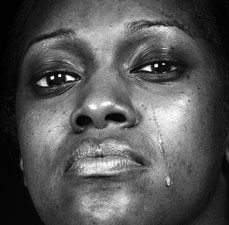
Though America regularly lectures other nations about women's rights and gender equality, activists and advocates say the U.S. has its own problems when it comes to women who are incarcerated and who find themselves in other vulnerable situations.
(FinalCall.com) - Robin Levi has a simple point of view when it comes to violence against women in the United States and what the government should be doing to stop abuses. “What's really important is reminding ourselves the United States is not immune from human rights law,” said the human rights director of San Francisco Bay area-based Justice Now.

“Human rights law applies to everybody from the virtue of being human beings and that includes people in the United States and people in prison,” she said.

Though America regularly lectures other nations about women's rights and gender equality, activists and advocates say the U.S. has its own problems when it comes to women who are incarcerated and who find themselves in other vulnerable situations.

When a United Nations expert recently visited America to examine the status of women and violence, Ms. Levi, who works to end violence against women and stop their imprisonment, helped to coordinate the UN special rapporteur's visit to California.

Rashida Manjoo, who is examining the causes and consequences of violence against women for the United Nations, went on a two week tour in California as part of a six-state tour designed to gather facts and testimony about the problem.

Ms. Manjoo began her tour of detention centers and battered women's shelters Jan. 23 and will report her findings and recommendations to a special session of the U.N. Human Rights Council on Feb. 7.

The tour is a reminder that America is part of the international community and that it has to live up to its human rights obligations for everybody within its borders, Ms. Levi told The Final Call.

According to Ms. Levi, the current U.N. mission stems in part from a 1999 visit by then U.N. Special Rapporteur on violence against women Radhika Coomaraswam.

Ms. Coomaraswam specifically looked at violence against women in prison, and Ms. Manjoo is here to see if changes and recommendations made a decade ago have occurred or not, Ms. Levi said.

The rapporteur found in 1999 that California (which had at the time the largest number of women incarcerated within the U.S.) had inadequate administrative or penal protections against sexual misconduct in custody. There was no comprehensive method for reporting or investigating allegations of sexual abuse in the state's facilities, and sexual misconduct became criminalized only in 1994.

Part of Ms. Coomaraswam's recommendation was that federal funding for state and correctional facilities should require that states criminalize all forms of sexual violence and misconduct between staff and inmates—whether consent was given by the inmate or not.

Ms. Levi said that what Ms. Manjoo could expect to find, certainly in California, is that sexual abuse has decreased somewhat but racial disparities within prisons remain and have perhaps worsened.

In fact, she said, although the rapporteur in 1999 expected to find racial disparities in the make-up of women in prison, she was shocked at the overwhelming levels of racial disparity.

According to Human Rights Watch, 2.3 million people were incarcerated in the United States as of June 2009, with racial and ethnic minorities disproportionately represented.

A prison research and advocacy reform organization, The Sentencing Project, says Black women represent 30 percent of all women jailed in federal or state institutions and Hispanic women represent 16 percent.

“I think that she's going to find that the health problems are still there and perhaps worse.I'm hoping she'll look into some of the reproductive abuses that we've seen inside theCalifornia prison system in which primarily women of color have experienced increased levels of sterilization through hysterectomies, ovarectomies and other methods,” Ms. Levi said.

Ms. Manjoo, a professor at the Department of Public Law at the University of Cape Town, South Africa, is particularly probing violence against women in prison and the military, sexual violence, gun violence, and the relationship between poverty and violence against women.

Visit coincides with federal legislation

“What we know is that domestic violence is the primary cause of homelessness for women and their children in the U.S. ... In some cases women who are in abusive relationships need to be able to flee their home but if they don't have the option to go to a shelter or if they don't have another housing option, they may be forced to stay in abusive relationships,” said Attorney Sandra Park, of the ACLU's Women's Rights Project.

“Unless we look at how violence affects poor women, we are not addressing the issue at all,” Atty. Park told The Final Call.

Ms. Manjoo's visit is also critical because this year Congress will consider reauthorization of the Federal Violence Against Women Act, Ms. Park said.

The act was proposed in 2005 to help provide funding for domestic violence programs across the U.S., and provide protection against evictions of women after they were victimized.

The ACLU was instrumental in linking Ms. Manjoo to groups and individuals to make sure she received firsthand information about issues of violence plaguing American women.

Some landlords use “no criminal activity” provisions in their leases to evict women who have had to call police for domestic violence incidents.

Some workplaces penalize women who need time off for court appearances, or are being stalked by their abusers at work, Atty. Park continued.

Some companies have tried to improve on the issues and have adopted good policies such as informing security of an abuser's characteristics, changing employee phone numbers, or providing victims with escorts to their cars, she said.

Atty. Park hoped Ms. Manjoo's visit to New York to meet with the Service Women's Action Network about sexual assault in the military would raise awareness about how the U.S. military and Veterans Affairs Department largely ignore complaints.

According to Atty. Park, sexual assault and rapes in the military are extremely high and there are very few options for service members to pursue, except to report to their chain of command superiors.

There is no incentive for commanders to address complaints in serious ways because complaints reflect negatively on performance evaluations if commanders have reports of sexual assault within their units, she said.

“It's actually set up in a way that creates an incentive to try to squash those complaints or make them go away ... generally the military is treated differently from all other workplaces in the U.S. So the kinds of rights that a woman might have if she was sexually assaulted at work are totally inapplicable if you're a member of the military,” Atty. Park said.

Bookmark and Share

FROM THE FINAL CALL NEWSPAPER

Goin' Broke: Cities, states suffer as U.S. economic crises creeps along

By Starla Muhammad -Staff Writer- | Last updated: Jan 29, 2011 - 10:37:15 AM

Bookmark and Share

What's your opinion on this article?

Printer Friendly Page

people_economy02-01-2011_1.jpg
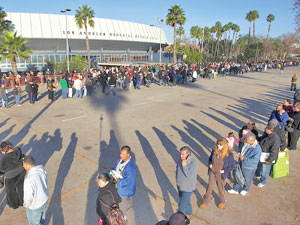
Thousands of people line up to attend the first day of a foreclosure event organized by the Neighborhood Assistance Corporation of America,( NACA), Jan. 20, at the Los Angeles Memorial Sports Arena. NACA provides counseling for home owners struggling to make their mortgage payments, and opportunities to lower payments in order to halt foreclosure. (AP Photo/Damian Dovarganes)
‘With 42 percent of Blacks and 37 percent of Latinos lacking the funds to meet minimal household expenses for even three months should they become unemployed, cutting public assistance programs will have devastating impacts on Black and Latino workers.’
—Brian Miller, Executive director
United for A Fair Economy

(FinalCall.com) - Anywhere from 50 to 100 cities in 2011 may be declared bankrupt. This bold prediction, made by financial analyst Meredith Whitney last year in media reports, coupled with mounting debt facing cities and states has financial budget officers and legislative officials on state and local levels in a panic. States are frantically implementing austerity measures, cutting important programs that leave the most vulnerable residents even worse off.

Camden, N.J. cut one-half its police force and one-third of its firefighters in a city known for high crime and where more than 40,000 of its 80,000 residents live in poverty. Oakland reduced its police force by 10 percent, leaving fewer than 700 officers in a city with a population of over 400,000.

Tulsa, Okla. could potentially lay off 147 firefighters whereas Trenton, N.J. avoided having one-third of its fire department axed due to receiving a $13.7 million grant from FEMA. Layoffs in sanitation departments from Bessemer City, Ala. to New York City have resulted in hardships for many. Cuts in city services is just the tip of the iceberg, observe analysts.

“The deficits that these tax cuts help create are being used to justify a host of austerity measures that will harm Americans of all races, but will hit Blacks and Latinos the hardest,” said Brian Miller, executive director of United for A Fair Economy in a Jan. 14 press release for its annual State of the Dream report.

“With 42 percent of Blacks and 37 percent of Latinos lacking the funds to meet minimal household expenses for even three months should they become unemployed, cutting public assistance programs will have devastating impacts on Black and Latino workers,” continued Mr. Miller. Cuts have also adversely affected other underserved groups.

“We've seen a lot of cuts to programs that keep the elderly and disabled in their homes and out of institutions. The bottom line is that many, many of these state budget cuts really have a deep impact on states' most vulnerable residents,” Phil Oliff, policy analyst for the Center on Budget and Policy Priorities told The Final Call.

Analysts report states have spent as much as half a trillion dollars more than they have collected in taxes and have been barely “getting by” on federal stimulus money.

The New York Times reported, “policy makers are working behind the scenes to come up with a way to let states declare bankruptcy and get out from under crushing debts, including the pensions they have promised to retired public workers.”

This mounting financial crisis has led to cuts in health care, education, police and fire services and social service programs. Some local and state governments are in such dire conditions there are murmurings from some the situation is a similar yet eerie precursor to the eventual debt crisis engulfing Europe and the subprime mortgage debacle that hit the U.S.

California is facing a $20 billion budget deficit and Illinois potentially $15 billion. According to the Center on Budget and Policy Priorities, to date some 44 states and the District of Columbia are projecting budget shortfalls for fiscal year 2012, which begins July 1, 2011 in most states.

“Titanic and Sinking: The Illinois Budget Disaster,” a forthcoming report scheduled for release Feb. 1 paints an ominous picture stating that by the end of the 2010 fiscal year, the shortage of ready cash for the state was “so severe” and the state was more than seven months behind in paying its bills. What does this mean for middle income, lower middle income and the working poor?

“States provide aid, they provide money to local governments to the extent that, that money if it shrinks…could have a major impact on local budgets for cities and that can lead to things like layoffs of police, firefighters and cuts to city services,” notes Mr. Oliff.

In Illinois, there were delays in state employee health insurance reimbursements, forcing some to pay medical providers upfront and delays in payments to pharmacies, funeral homes and social service providers, continued the Titanic and Sinking report.

The Center on Budget and Policy Priorities also noted that due to steady decline in tax revenue and budget reserves largely drained, the vast majority of states have made spending cuts that hurt families and reduce necessary services.

The center notes cuts in 46 states plus the District of Columbia since 2008 have occurred in all major areas of state services, including health care (31 states), services to the elderly and disabled (29 states and the District of Columbia), K-12 education (34 states and the District of Columbia), higher education (43 states), and other areas.

In Arizona preschool for 4,328 children was eliminated along with funding for schools to provide additional support to disadvantaged children from preschool to third grade as well as aid for computers, classroom supplies and books.

Additional cuts in services included:

* The South Carolina Department of Juvenile Justice lost almost one-fourth of its state funding, resulting in over 260 layoffs and the closing of five group homes, two dormitories, and 25 after-school programs.

* California is eliminating cost-of-living adjustments to cash assistance programs for low-income families and cutting child care subsidies.

* Colorado is cutting payment rates for mental health providers and eliminating funding for residential treatment for an estimated 626 patients each year in the state's mental health institutes.
Cuts to state services not only harm vulnerable residents but also worsen the recession and dampen the recovery by reducing overall economic activity. When states cut spending, they lay off employees, cancel contracts with vendors, reduce payments to businesses and nonprofits that provide services, and cut benefit payments to individuals, notes the CBPP. City governments are finding themselves in financial binds because they are not being paid by the states.

Over 230 mayors from around the country met with Pres. Barack Obama, federal lawmakers and cabinet members at the 79th winter meeting of the United States Conference of Mayors in Washington, D.C., Jan. 19-21 with job creation strategies being among the top priority for discussion.

“The jobs picture for cities and suburbs remains extremely challenging,” said Elizabeth Kautz, mayor of Burnsville, MN and conference president in a Jan. 19 press release. According to an economic report released by the Conference of Mayors and Global Insight, “nearly one-third of the nation's 363 metro areas will still have an unemployment rate higher than 10% at the end of 2011.” The report also notes that 42 percent (152) metropolitan areas will not gain back their pre-recession job levels until after 2014.

Dr. William Darity, arts and sciences professor of public policy studies and professor of African and African American Studies and Economics at Duke University told The Final Call the high poverty rate is a direct result of the current economic crisis and what he calls, “the continuing problem of trying to provide support to folks who are suffering in the midst of this crisis when states are facing huge budget deficits.”

While local, state and federal legislators, economists, financial analysts and the like, struggle to steer a sinking ship, one must look no further for guidance, counsel and advice than to the Honorable Minister Louis Farrakhan. His quintessential book, “A Torchlight for America,” though published in 1993, offers perfect guidance for today.

Min. Farrakhan lays out a detailed and systematic solution to America's economic woes in the chapter titled “Rebuilding the Economy.” Reducing the federal deficit and budget debt, job creation and job growth are but a few of the areas where the Minister offers divine guidance.

He writes: “We need, first of all, a new state of mind among leadership in government and the business community. A new state of mind that sees the right to work as central to having a free, just and equitable society – as central to promoting family values. The government and private business should work together to ensure that every American has a job.”

Bookmark and Share